
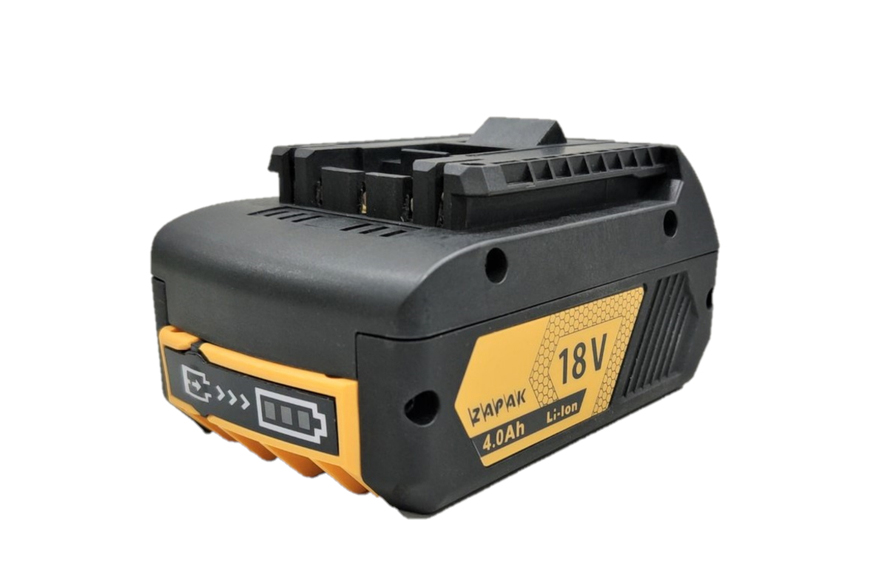
ZAPAK Li-Ion Battery 101: Basic Knowledge
What are the advantages of ZAPAK Li-Ion Battery?
a) No memory effect, re-chargeable at any time.
b) Higher energy density results in smaller battery size and lighter weight.
c) Minimum self-discharge rate.
d) Much longer service hours and increases numbers of strapping cycles greatly.
e) Wider operation temperature range from -10°C up to 50°C.
What is battery memory effect?
Memory effect builds up quickly with Nickel-based batteries when they are not charged and discharged fully or properly. When memory effect is built up, it reduces the capacity because a proportion of the battery cell is occupied by memory effect and becomes unusable. In result, the reduced capacity of battery provides shorter service time and requires more frequent times of charges. Consequently, battery's lifetime will be reduced drastically by accumulated memory effect.
What is “self- discharge“ in Li-Ion battery?
It means that a Battery loses its power or energy gradually when it is being stored and not in use for some time. Therefore, battery needs to be re-charged before tool can be used. Battery tools with Li-Ion batteries always get ready sooner for operation and its low discharge rate sustains busy productions better than Nickel based batteries.
What is “overcharge“ in Li-Ion battery?
Battery is composed of battery cells and each battery cell is composed of different chemical components such as metals and electrolyte in order to produce required chemical reactions. When a certain voltage is reached, the electrolyte may start to decompose and unable to perform chemical reactions. And the battery cell gets weakened and then destroyed. For Li-Ion cell, 1% overcharge triggers electrolyte decomposing. The intellectual circuit protection on ZAPAK Li-Ion battery & battery charger, against overcharge & over-discharge with minimal self-discharge.
What is “working temperature“ range?
In general, all types of battery need to be used within a certain working temperature range. For Li-Ion battery, the temperature range is from -10°C up to 50°C which refers to the temperature of the battery cells, not ambient or environmental temperature. If working temperature is too low, the battery cell will be frozen and output of battery power stops. If working temperature is too high, it destroys the battery cells.
What is the charging temperature range of Li-Ion battery?
Charging temperature range is regulated between 0°C and 40°C. Do not charge the battery out of recommended temperature range. Or, it might generate serious heat, damage and deterioration of battery's functions and cycle life.
Should Li-Ion battery stay on the Li-Ion charger after charge process is completed?
To avoid any uncontrollable risks, it is still recommended to remove the battery from the charger after charge process is completed though the charging current has been automatically stopped.


